
Takeaways
- Virtual clinics are an effective way for large dealerships to reach more people and cut down on the costs of hosting several in-person clinics per year.
- Online clinics help expand a dealership's digital footprint and solve the challenges of covering such a large customer base with different farming practices and crops.
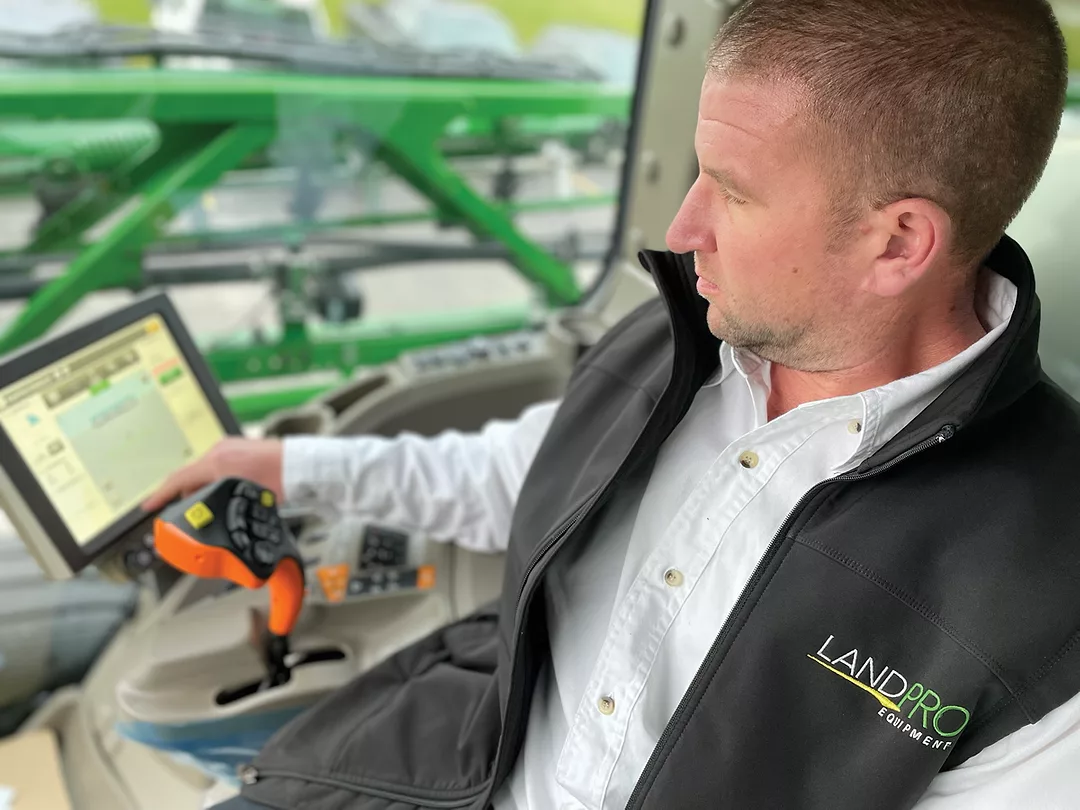
In Batavia, N.Y., LandPro Equipment integrated solutions manager Ben Flansburg started wondering several months ago if it’s time for a shift in his dealership’s approach to customer clinics.
“During a meeting last summer with some fellow Deere dealers, we started talking about online clinics and it got me thinking, ‘Why are we putting so much time, money and effort into in-person clinics nowadays?’”
Flansburg thinks online clinics might be the way to go to offset the challenges of declining attendance and rising expenses. He’s looking at online clinics as an upgrade, not a complete replacement of in-person clinics.
“We sat down as a management team and came up with a roadmap to this new approach,” Flansburg says. “The first thing we did was a customer poll. Do you enjoy coming to our in-person clinics? What if we did something more like an online format that you could watch at your own pace and go back and review the material when needed? We had really positive feedback from the small group we polled.”
One of the biggest positives expressed in the initial feedback is the ability to watch training videos anywhere and anytime. Customers also voiced the desire for shorter content. Anything longer than 5-7 minutes might be pushing it.
“Rather than sitting through our clinic, falling asleep after lunch and forgetting what was covered, they can go back and review videos anytime they want,” Flansburg says. “They know where to access them and can watch in the springtime while sitting in the cab. That’s more valuable to them than the free hat and hot dog we gave them back in January that they forgot all about.”
LandPro Equipment has 20 stores spread across New York, Pennsylvania and Ohio. Online clinics help expand their footprint and solve the challenges of covering such a large customer base with different farming practices and crops.
Implementing Online Clinics
Ben Flansburg and the management team at LandPro Equipment came up with the following roadmap for launching virtual programs.
- Audit existing training materials.
- Redesign those materials for online delivery (videos, slides, quizzes).
- Pilot with small customer group.
- Roll out broadly, gather feedback, refine.
- Maintain continuous improvement cycle.
“In the past, we’d typically host 3 different customer clinics to cover our whole region,” Flansburg says. “Then when you talk about different operational clinics for planters, sprayers, combines, you end up having up to 18 in any given year just to cover your region. The expense, time, travel and effort that goes into that becomes overwhelming. It could be one person’s full-time job just planning and executing these in-person clinics. I don’t think we’ll ever get away from doing in-person clinics, but this is just a way to reach more people, more effectively while lowering internal costs.”
Flansburg says some dealers might fear losing customers if they don’t engage with them in person. But from the customers he’s talked to, that’s not necessarily the case.
“They want information and they want to feel like a valued partner,” Flansburg says. “Sometimes they feel like it’s more of an inconvenience if they have to come to our dealership for a clinic or maybe they feel if they don’t come that we’re not going to put them higher on the totem pole of service.”
“Why are we putting so much time, money & effort into in-person clinics nowadays…”
Flansburg’s team has only been producing online clinic videos for less than a year, so he admits this approach is a work in progress. He still wants customers to feel the personal connection and doesn’t want the videos to become part of a generic, endless feed on a YouTube channel. He’s relying on key customers to help guide them in the right direction.
“Everybody knows the 80/20 rule. Eighty percent of your business comes from 20% of your customers. We’re starting by focusing on that 20% for email lists, polls, engagement and feedback. They’ll help build the program. We piloted this with a small group. If you work with 500 customers, by all means, do not try to just roll this out to all 500 customers. Pick a key group of people, they’ll give you good feedback on how to improve.”
Part 1: Swiderski Equipment Cuts Down on Service Stress with Educational Clinics
Part 3: Independent Dealer Shares Tips for Getting the Most Out of Customer Events

![[Technology Corner] Aligning ‘Smart Implements’ with Autonomous Tractors](https://www.precisionfarmingdealer.com/ext/resources/2026/10/01/Aligning-Smart-Implements-with-Autonomous-Tractors.webp?height=290&t=1790966217&width=400)

