
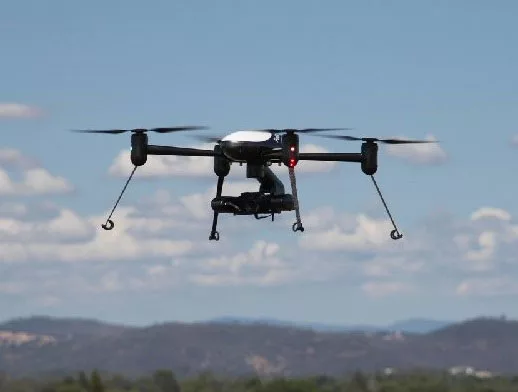
As sustainability claims become central to commercial UAV adoption, carbon footprint is increasingly mentioned, but rarely is it quantified in a way that reflects real operations. Most discussions focus on emissions per flight, per hour, or per platform. These metrics are convenient, but they miss the variable that actually matters for decision-making: Carbon emissions per acre treated.
Field data and life cycle assessment (LCA) results show that carbon efficiency in UAV-based spraying is not inherent to the technology. It is highly sensitive to operational design, making per-acre analysis essential for credible comparison with conventional spraying systems.
Why Per-Flight Metrics Are Misleading
Carbon reporting in UAV operations often emphasizes:
- Battery type and capacity
- Charging electricity source
- Flight duration
While these factors are relevant, they say little about work delivered. A short flight that treats a small area inefficiently can have a higher carbon footprint per acre than a longer, well-optimized mission.
In field comparisons, two UAV operations with similar per-flight energy use differed by more than 40 percent in carbon intensity per acre, solely due to differences in coverage efficiency and mission planning.
Life Cycle Perspective: Where Emissions Actually Come From
Life cycle assessment shifts attention beyond the drone itself. In agricultural UAV spraying, dominant emission contributors typically include:
- Electricity used for battery charging
- Number of flight cycles per acre
- Payload utilization efficiency
- Repeat applications caused by poor deposition
Under optimized conditions, UAV spraying demonstrated lower or comparable CO₂-equivalent emissions per acre relative to tractor-based spraying. However, this advantage was quickly lost when:
- Flight overlap increased
- Payload capacity was underutilized
- Missions required multiple re-flights due to uneven coverage
Carbon efficiency, therefore, fluctuates with operational discipline.
To read the full article on UAV Spraying Sustainability, click the link.

![[Technology Corner] Aligning ‘Smart Implements’ with Autonomous Tractors](https://www.precisionfarmingdealer.com/ext/resources/2026/10/01/Aligning-Smart-Implements-with-Autonomous-Tractors.webp?height=290&t=1790966217&width=400)

