
Our sister publication Farm Equipment recently updated its timeline of ag equipment "firsts," which documents the major breakthroughs in agricultural history. The timeline — spanning from 5500 B.C. to 2023 — features several pivotal moments in the evolution of precision ag. I picked out 33 of them to highlight below.
We're aware that each proclaimed "first" comes with debate, and you're welcome to engage in that debate. Feel free to email me your comments, questions or discoveries that should be added to the timeline at NNewman@LessiterMedia.com.
1978
Raven introduces the Sidekick Pro, the first speed-compensated, automatic rate control system. Its direct-injection system sets a new standard for chemical applications with unprecedented precision, savings, and safety while eliminating tank mixing and misapplication.
1979
Raven’s sprayer controller developments bring precision to pesticide application. It accurately measures the flow of pesticides with the ability to shut off individual sprayer nozzles.
1991
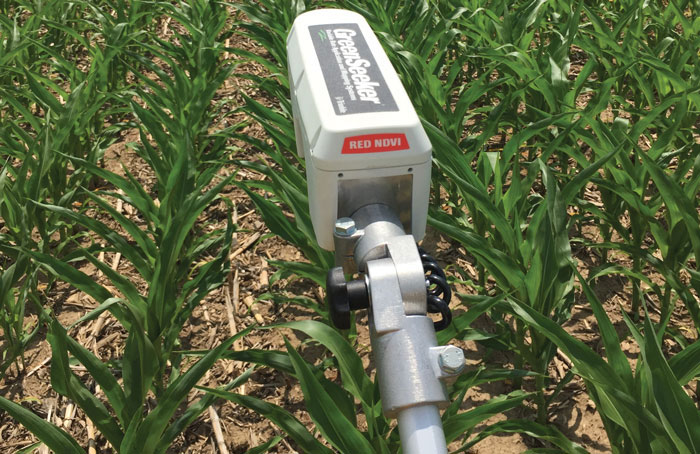
Initial optical sensing research at Oklahoma State Univ. focuses on detecting and spraying weeds. At the same time, James Beck, a Northern California electronics engineer, develops the Patchen technology and in 1992 founds Patchen, a subsidiary of NTech. He then designs a spraying system integrating the technology. This integrated optical sensing becomes the basis for GreenSeeker variable rate fertilizer application system and WeedSeeker, which uses similar technology to selectively spot spray weeds.
1992
Ag Leader founder Al Myers releases the Yield Monitor 2000, the first accurate combine yield monitor, which was a significant achievement in what would become known as precision farming.

Satloc Inc. introduces the first GPS lightbar, initially designed for guidance in aerial applications. As the reliability of GPS receivers improved, the technology was adapted to ground-based applications.
Trimble develops real-time kinematic (RTK) technology. By adding a correction signal to the signals coming from GPS satellites, RTK allows extremely accurate moment-by-moment location updates while on the move and becomes invaluable for high-accuracy guidance of construction and ag equipment.
1994
The precision age begins as farmers use GPS receivers to determine which areas need specific quantities of water, fertilizer and pesticides. Farmers synthesize this data with yield information, weather forecasts and soil analysis in spreadsheets. “Precision farming is said to have moved ag mechanization forward more than prior advances,” says Paul Wallem, “and merged new technology of the information age within a mature industry.”
Satellite technology is used in tracking and planning farming practices.
1996
John Deere launches its first production-grade GPS receiver, known as the GreenStar Precision Farming System. Their brochure predicted, “Information is your new crop!" Nicknamed "green eggs and ham," the receiver brought satellite control to farmers’ tractor cabs.

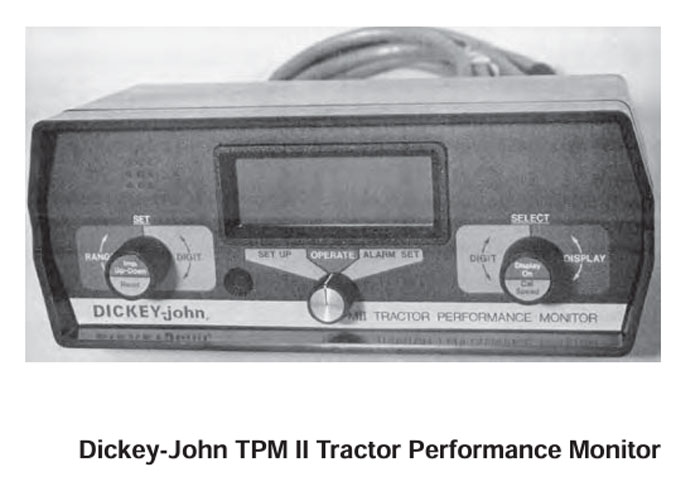
DICKEY-john couples its “radar-ground speed as true ground speed” technology with a drive-shaft sensor and to display to the farmer, true wheel slip functionality. Patented in 1988, the DICKEY-john TPM II tractor performance monitor is soon adopted by tractor OEMs.
1999
The AutoFarm Agricultural Division of Novariant launches the first commercially available automated steering system for farm equipment using GPS.
2003
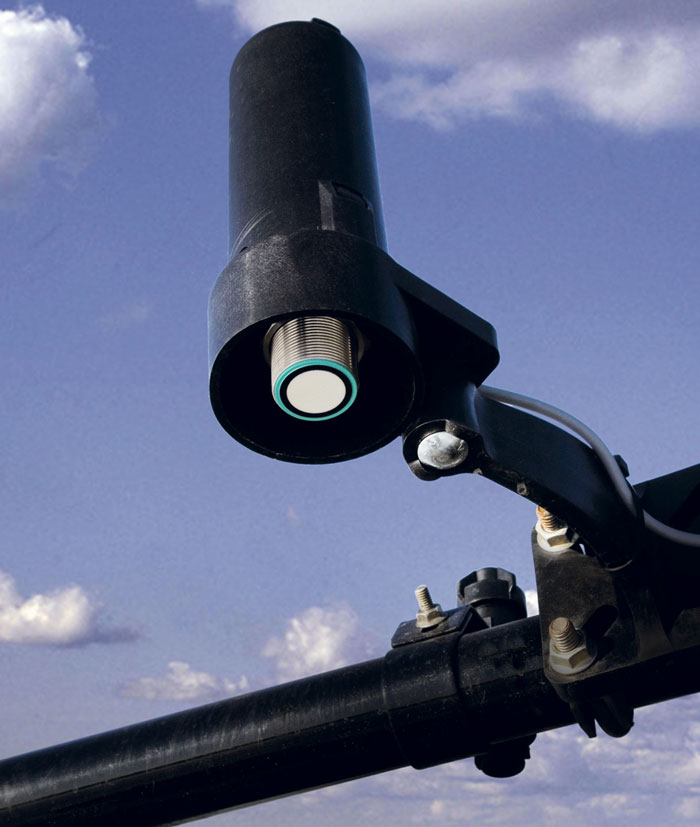
Canada-based Montgomery Industries develops AutoBoom boom height control system to accurately control spray booms during high-speed spraying. Raven acquires Montgomery in 2005.
2006
In partnership with Orthman Manufacturing, AutoFarm introduces AFTracker, the first implement steering system based on RTK GPS.
Iowa farmer Glen Dillman and sons add Air Clutch (2006) to their Acre Counter and Conser Clutch. The Air Clutch is the first on the market that controls every single row on a planter. The company will be acquired by Trimble in 2008.
2008
Leica Geosystems debuts its Continuously Operating Reference Station network software that allows auto-steer system users to rely on signals from tower networks across the U.S. Many networks provide free RTK signal access through their state’s Dept. of Transportation.
Valmont produces the first electronic control panel that will accept GPS directions for center-pivot irrigation.
Precision Planting introduces the 20/20 Seed Sense monitor that pinpoints the percentages of seed singulation for each row, seed spacing, ground contact and down pressure, along with corn hybrid tracking and determines the economic loss per acre due to combined planting inaccuracies.
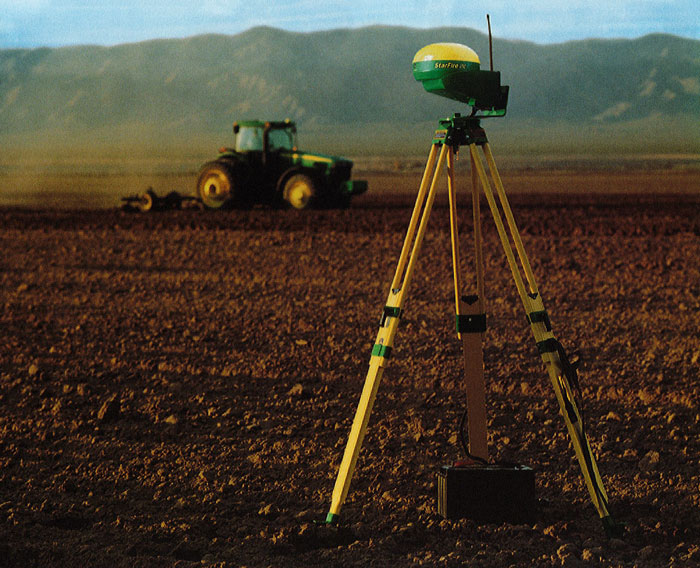
John Deere introduces the Intelligent Total Equipment Control Pro system that expands the use of the GreenStar system by automating tractor driving. When paired with AutoTrac, it takes over control as the tractor approaches a headland, allowing the operator to remain hands-free as it automatically decreases ground speed, lifts the implement, steers the tractor into the next area and then reengages the implement.
2010
Remote monitoring appears on the scene, enabling the monitoring and planned maintenance of machines via sensors and connectivity and sensors allowing real-time data collection.
2013
AGCO launches Fuse Technologies to provide mixed-fleet-farming operations with improved connectivity to farm data.
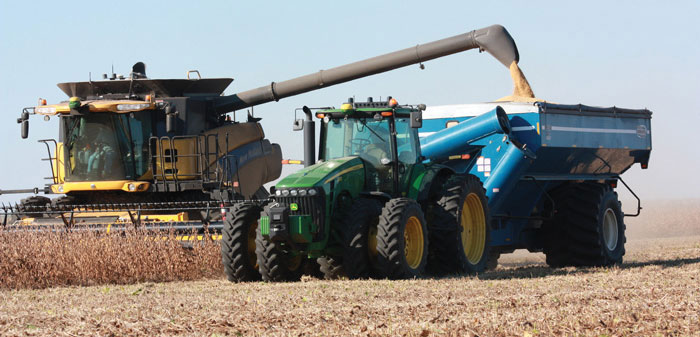
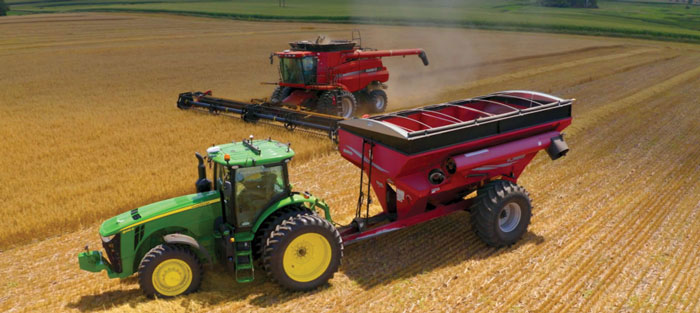
The Kinze autonomous grain cart features a driverless tractor. It showed autonomy in 4 models of operation: a grain cart following the combine through the field, unloading from the combine into the cart, return and park following unloading and stopping and awaiting further instruction from the combine operator.
Ag technology startup 640 Labs creates its Drive (later renamed Fieldview Drive), a device that reads data from the CANBUS of tractors and connects portable devices.
2015
The “digital ag” era begins, allowing the collection, storage, analysis and sharing of electronic data information in ag, and leading to higher personnel requirements of dealers. Concurrently, Right-to-Repair uproar begins as farmers seek access to codes needed for self-repair.
2016
Case IH demonstrates the cabless Magnum tractor in its CNH Autonomy Project, which promotes autonomous seeding, planting and tillage for row-crop farming.
2017
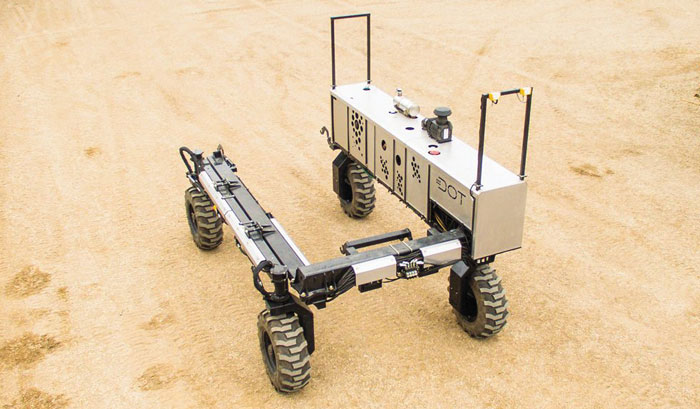
Norbert Beaujot, the co-founder of SeedHawk, SeedMaster and Dot Technologies in Saskatchewan, introduces its diesel-powered U-shaped autonomous power unit. This driverless unit can be paired with a wide range of implements for tillage, seeding and harvesting. The concept is later sold to Raven, which is purchased by CNH in 2021.
2019
Sabanto Ag builds its first autonomy kit and autonomous units in 2020. The group also popularized custom farming with the use of its technology, or “farming as a service.”
2020
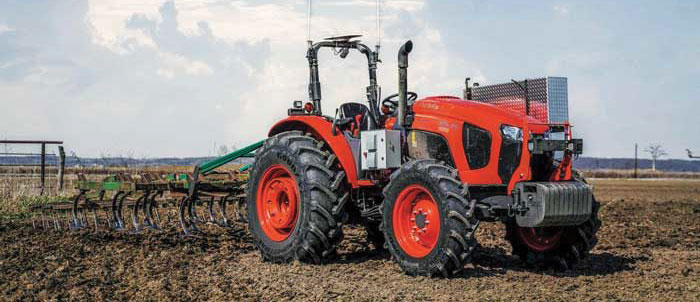
Monarch Tractor introduces the world’s first fully electric, driver or driverless optional, smart tractor that is operated on a single electronic platform.
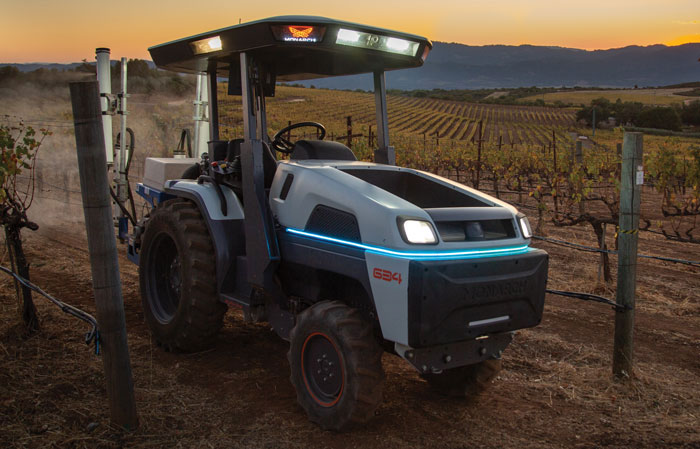
Soletrac moves into the ag market with its battery-powered tractors. The equivalent of an 80-90 horsepower gas- or diesel-powered tractor, its eUT+ tractor is designed to fit between narrow rows in orchards and vineyards.
Raven’s AutoCart allows a single operator to drive the harvester and call a tractor with the grain cart to come up alongside and receive the load.
2021
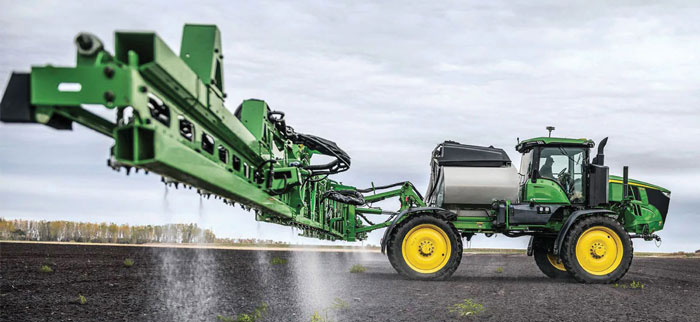
John Deere introduces its See & Spray Select Technology that allows farmers to reduce non-residual, preemergence herbicide use by targeting and spraying only growing weeds in fallowed fields. Cameras mounted on the sprayer rapidly detect green plants and trigger a spot-spray herbicide application to these plants.
The “Environmental Benefits of Precision Agriculture in the U.S.” study (AEM, ASA, CropLIfe and TFI) reports “the cultivation of 10.2 million acres of cropland was avoided via more efficient use of existing land”. The report states 15,000 tons of herbicide have been avoided due to adoption of precision ag technologies such as auto guidance, variable rate and section control.

2022
Case IH introduces the Trident 5550 fully autonomous self-propelled spreader for both liquid and dry fertilizer applications.
John Deere announces that its fully autonomous tractor is production ready. The package combines Deere’s 8R tractor, TruSet-enabled chisel plow, GPS guidance and new advanced technologies.

2025
For the first time, a fully autonomous feature in a driver-optional tractor becomes commercially available for dairies, as Monarch Tractor begins the rollout of its Autodrive Technology. Monarch's MK-V Dairy tractor becomes commercially available for autonomous feed pushing in outdoor dairy lanes, day and night. 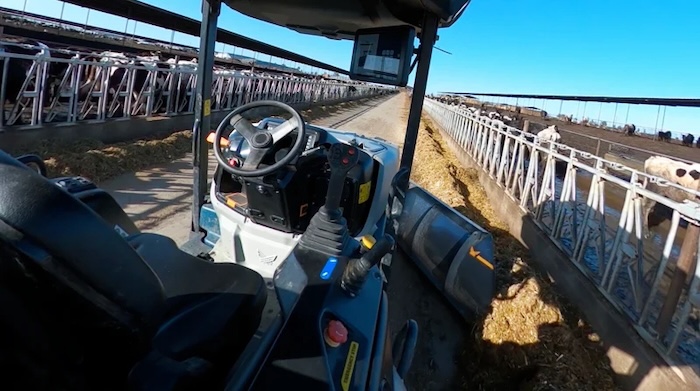
Click here to read Farm Equipment's ever-changing timeline of equipment "firsts."

![[Technology Corner] Aligning ‘Smart Implements’ with Autonomous Tractors](https://www.precisionfarmingdealer.com/ext/resources/2026/10/01/Aligning-Smart-Implements-with-Autonomous-Tractors.webp?height=290&t=1790966217&width=400)

