
During a recent trip to Agritechnica, the world’s leading trade show for farm equipment, John Fulton noticed a common theme.
“Everyone seemed to have something in their booth that centered around automation,” says the professor at Ohio State Univ.’s Department of Food, Agricultural and Biological Engineering. “If you didn’t have a robot in your booth, you weren’t keeping up with the Joneses.”
This affirmed Fulton’s belief that the automation trend is coming quicker than many think. And so is AI, because the two go hand in hand, Fulton says. “There was hardly anything about AI because it’s already embedded in the technology being used or offered through companies today.”
During his presentation at the 2026 Precision Farming Dealer Summit in St. Louis, Fulton discussed how farmers can position themselves to adopt some of these breakthroughs coming down the pike.
Get Your Data Ready
First, Fulton says, farmers need a plan to collect, manage and store data so it can be used to make improvements on the farm with precision technology and AI. He recommends starting simple and working up to something more complex if you’re a data novice.
“Add one data layer at a time, whether it’s pulling it off your monitor at night or looking at your iPad,” Fulton advises. “Make sure your yield monitor is calibrated because yield data ultimately is one of those layers that every precision ag provider requires to provide service to you.”
It’s also critical to back up data as soon as it’s collected, he notes, to reduce the risk of losing it after software updates or potential cyberattacks, which are becoming more common.
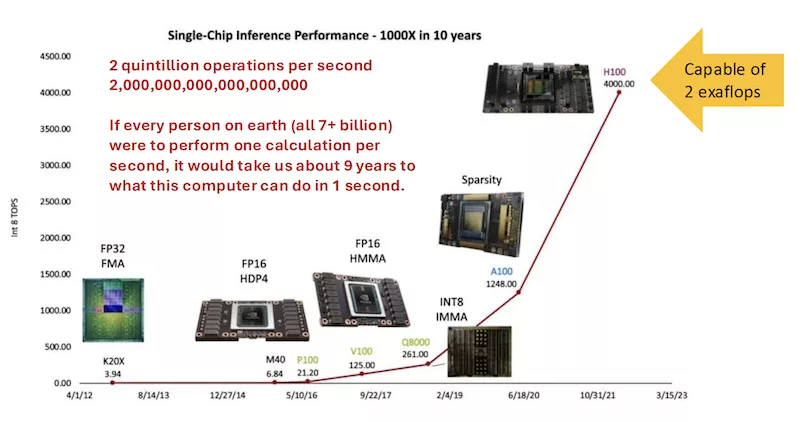
“It would take us about 9 years to do what this computer can do in 1 second…”
“I’m working with a client now and they had all this data,” Fulton recalls. “We came in one day and there was no data from the last 5 years. They never backed anything up and it had been deleted from the displays. There was some kind of update that occurred and they lost all that data that could’ve been used to build their fertility and seeding plans for the year.”
Farmers should consider turning their data into at least one decision per year, Fulton says.
Some simple, high-ROI data-based decisions include adjusting nitrogen (N) rates in low-yielding zones, reducing seed population on poorer soils, adding residue managers or adjusting downforce in heavy-residue areas, improving drainage in areas where no-till residue keeps soils too cool or wet and changing hybrid placement based on past performance.
What AI Can Do for You
As technology keeps evolving, machines now process data at lightning-fast speeds. Look no further than the progress NVIDIA has made with its AI training/inference chips, Fulton says.
“NVIDIA’s Rubin GPU (AI chip) can deliver 50 petaflops of processing in one second, or 50 quadrillion operations per second on this single chip,” he says. “There is a GPU that can deliver 2 exaflops or 2 quintillion operations per second. This equates to if every person on Earth were to perform one calculation per second, it would take us 9 years to do what this GPU can perform in 1 second.”
John Deere’s See & Spray technology is one example of what an AI-powered system can accomplish on a farm, he says. With 36 cameras and 10 GPUs across the boom, See & Spray identifies and target-sprays weeds.
Fulton has seen up to 85% savings on some applications with the technology in Ohio field tests.
Overall, Fulton estimates farmers can improve their profitability using AI technology in the following ways:
- Early disease detection: 30-50% reduction in crop losses
- Yield prediction: 85-92% accuracy, as well as better grain management and market planning
- Precision irrigation/fertilization: 15-25% cost reduction and 30-40% less water/pesticide use
- Crop planning: Reduces risk of shortages or too much, stabilizing income
- Labor automation: Cuts scouting and monitoring costs; Complete field operations in a timely manner
“Many people are spraying or applying based on crop stage and available timing, and we don’t know if there’s an advantage or not to some of that,” Fulton says. “With new AI-driven technologies, farmers can be more proactive with their crop protection applications.
“Without a doubt, we can also predict corn yield in July,” he adds. “I can give you a corn yield map in July and feel confident that’s going to be how it comes out of your combine in October.
“Now, there’s a lot that can happen between July and October. The weather can turn. But for the most part, we can look ahead and have an idea about harvest yields on a field-by-field basis several months later.”
High Tech ROI
Your customers' operations thrive when variability, residue and inputs are managed with high precision. Fulton says the latest research and industry surveys show the following technologies deliver strong, proven returns:
- VRT (variable rate technology)
- Yield monitoring and mapping
- Auto-steer and section control
- Soil and crop sensors
- Remote sensing and drone imagery
- Advanced planter technology
- Data analytics and farm management platforms
- Automation and robotics
Taking it a step further, Fulton sees automation and robotics as potential game-changing tools for soil health.
“Soil compaction is a significant problem, and we’ll have opportunities to address that in the future through automation and robots,” Fulton says.
“We continue to build bigger machinery that have higher axle loads, and the only way to address that is by using smaller equipment in a swarm. That will help us start to eliminate or at least address any soil compaction we’ve induced the last 20 years with the large equipment we’ve been operating.”
Fulton and his colleagues at Ohio State dive deeper into the practicality of new technologies through the eFields on-farm research program. Drones, which have become increasingly popular for fungicide applications and cover crop seeding, were put to the test in 2025.
“From a spraying perspective, I’ll give you 3 things we’ve learned,” Fulton says. “First, the higher we fly, the more opportunity there is for the product to miss the target. Our data indicates the lower, the better. Speed and height are a big deal. When comparing flying at ground speeds of 15 mph to 20 mph, coverage reduced when going faster. And finally, we found that reducing the pass-to-pass swath width helps maintain uniform applications. For example, if you buy a drone and the recommendation is 40 feet pass-to-pass swath width, you probably need to be in the 30–34-foot range.”
Ohio State shared 8 years’ worth of eFields data on everything from automation to fertilizer placement in a full report that can be downloaded at digitalag.osu.edu/efields.
As emerging technologies gain traction, Fulton encourages farmers to ask themselves 2 big questions. If you could automate one task on your farm, what would it be? And what’s one thing in your operation you wish precision ag could do for you that it’s not doing today?
“We’ll most likely be able to solve these challenges within the next 10 years,” Fulton says. “I ask these questions to get you thinking because there are going to be solutions coming quickly.”

![[Technology Corner] Aligning ‘Smart Implements’ with Autonomous Tractors](https://www.precisionfarmingdealer.com/ext/resources/2026/10/01/Aligning-Smart-Implements-with-Autonomous-Tractors.webp?height=290&t=1790966217&width=400)

